
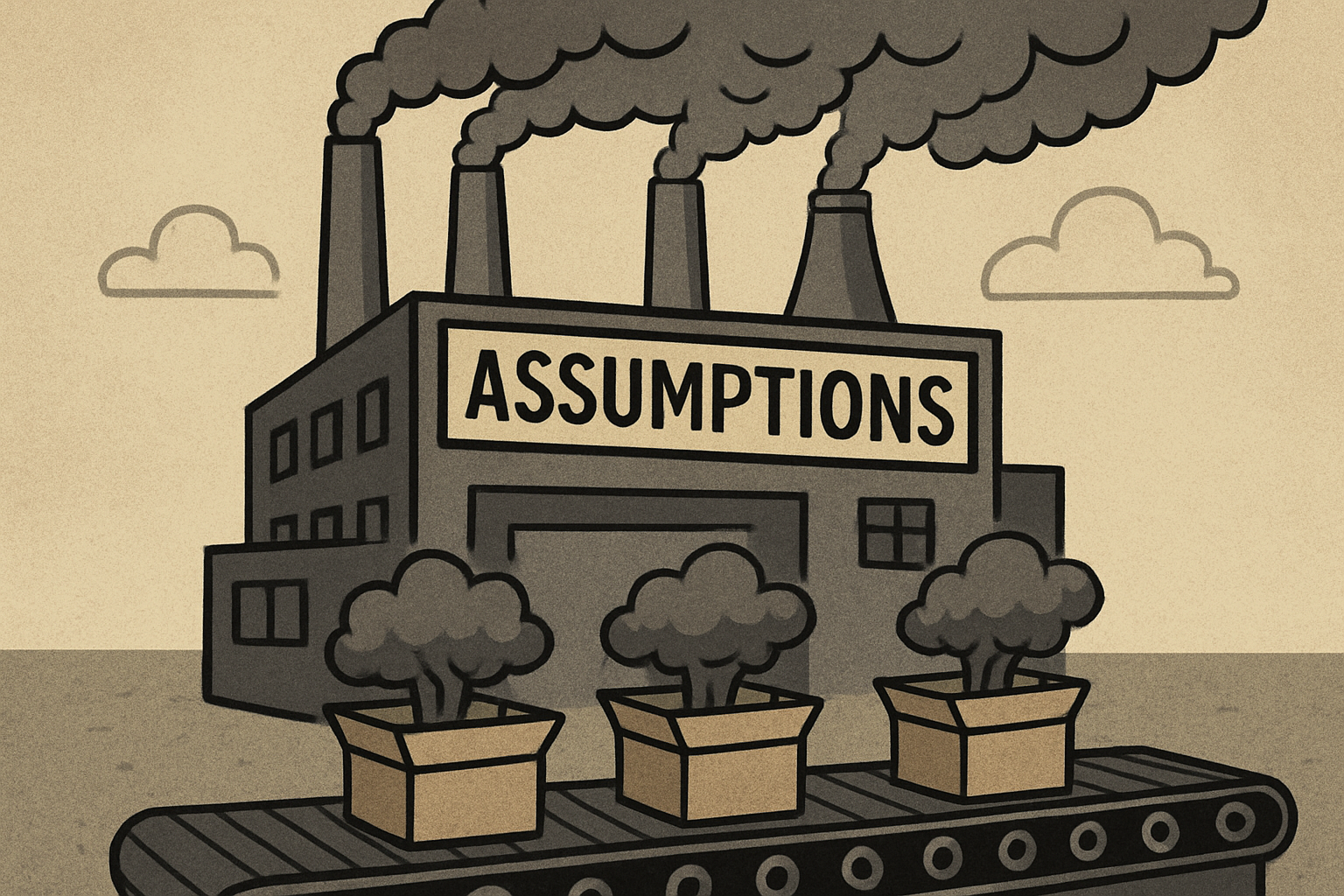
Assume the Worst: The phrase alone sounds like a motivational poster for pessimists, but let’s be honest; we’re all participants in the grand sport of daily assumption-making. We estimate, we guess, we fill in the blanks between “frames” of life like we’re creating our own graphic novel. Usually, this ends with no harm done, unless you’re me and some of your main characters are teenagers.
Here’s a fun fact I’ve learned as a parent of teens: nothing forces you to examine your behaviors quite like a teenager’s raised eyebrow. When my kids engage with the world, I get a front-row seat to the assumptions show, sometimes starring me as the unwitting villain.
Assumptions at Play (AKA: The Parking Lot Chronicles)
Picture this: a grocery parking lot, my son helping an older man load bags into a taxi. The man’s eyes widen, lips purse, and for a moment, it feels like we’ve wandered into a live episode of “Assumption Factory.” Was he wary of the hoodie? Did he think my son was going to run off with the bags? Maybe he’s just fiercely independent or afraid of losing his independence, or maybe (plot twist) he’s run into this scenario before. As I watched his inner calculator working overtime, I realized I was running my own mental math. And not for the first time.
Managing the Assumption Assembly Line
Assumptions are like that spam email from which you can’t unsubscribe - they just keep coming, no matter how many times you hit delete. My brain, ever vigilant, likes to spring into action at the first sign of danger (or drama). For example, if I see a car zooming toward me on the sidewalk, my inner caveman says, “Jump!” Was I right? Well, maybe the driver is just showing off their brakes. Either way, my primitive self takes no chances.
To keep the assumption beast at bay, I’ve started pausing for a quick reality check: What am I actually seeing, hearing, smelling, tasting, touching? Channeling my inner detective (think Dragnet meets Columbo), I focus on the facts and ask myself one more question. Rather than searching for evidence that supports my latest theory (or confirmation bias), I challenge it. What else could be happening here? What might I be missing? Curiosity may have killed the cat, but it sure keeps my relationships alive.
Assumptions: The Termites of Relationships (Thanks, Julie Brown!)
If we let assumptions run wild, they’ll build a fortress of “I know everything” and, trust me, that’s about as real as my ability to read a cat’s mind. Most assumptions about others’ intentions or behaviors are just plain wrong. If unchecked, they grow into misunderstandings, relationship rifts, and a shrinking sense of self-awareness. Who signed up for that?
Back to the parking lot: As I headed to my car, a woman passed by, beamed at me, and said, “What a wonderful boy. So helpful.” She missed the initial foot shuffle (when I was nudging my son into action!) but made her own assumption about him. Sometimes, letting a few assumptions slide unwatched isn’t the worst thing, especially if it means my son sees not all adults think teens are trouble (he really is a great kid, by the way).
Building Skills Beyond Assumptions
What works for me may not work for you. If you’re tired of your own assumption-powered misadventures, why not try some professional training? Developing awareness and conflict resolution skills is one way to upgrade your confidence and competence. The Resolution Group offers a range of workplace courses and workshops. Who knows, maybe your office could use a little less “assumption drama” and a little more connection. Imagine the difference!
If you want to learn more about managing assumptions, have a look at our Insight Into Conflict workshop at ResolutionGroup.ca.
About Rachel
I have been teaching people to manage assumptions and build communication skills for over 25 years. I absolutely love being part of the transformations that happen for them and their relationships.