
We all have our positions. But do we understand our needs?
Typically, when we’re faced with a decision, we go straight to our position, our preferred solution. “Let’s work from home twice a week.” “We should delay the launch.” “I’m not attending that meeting.”
These positions are easy to name. They feel obvious and logical to us, but what’s less obvious is why we hold them, what need we’re trying to meet underneath.
Most of the time, we don’t think about that part. Our gut tells us something will work, and we go with it. Maybe it’s familiar. Maybe it worked last time. But very rarely do we pause to ask: What need is this position trying to meet?
If you were to ask someone that question mid-decision, they might blink a few times and need a minute. It's not an automatic response; it takes reflection. And frankly, in the fast pace of daily life, we don’t always have the time or energy to slow down and reflect on our needs. We just need to get on with it.
But this habit, this shortcut, becomes a real problem when we’re in conflict.
The lunch order that wasn’t about lunch
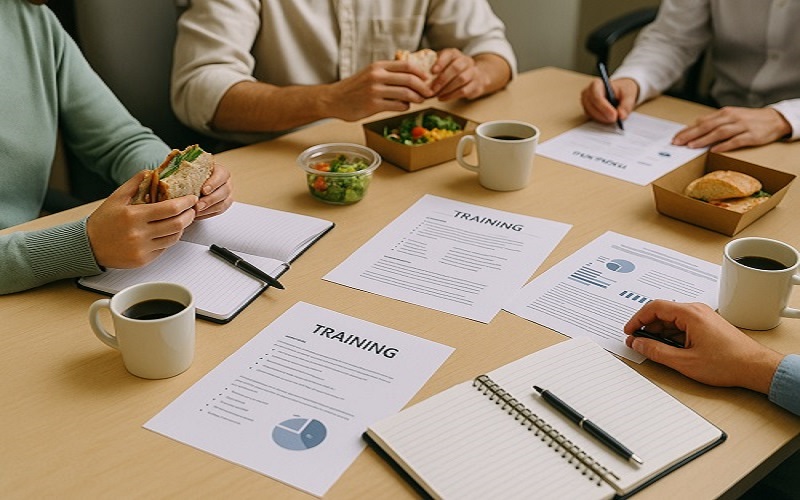
A while back, I was in a team meeting where the group was finalizing details for a two-day training session we were delivering. We were deciding on a lunch order for the second day. One colleague was adamant: “Let’s just cater from the same place both days. It's easier.”
Another pushed back: “I think we need variety. Some of our participants have dietary restrictions and might get frustrated with limited options.”
Back and forth it went, a surprisingly heated exchange over sandwiches.
It wasn’t until someone gently asked, “What are you hoping to avoid or achieve by choosing this option?” that the tone shifted.
Turns out, the first colleague had spent the last few weeks juggling multiple events and felt overwhelmed by logistics. Familiarity and ease were what she needed. The second person wasn’t just advocating for variety; they were concerned about inclusion and accessibility.
Same lunch order. Two different needs.
Once those needs were out in the open, it was much easier to brainstorm alternatives that met both: streamlined ordering and more inclusive options. In the end, they decided to stick with one caterer but chose a mix of menu items that accommodated everyone. A simple fix that worked for everyone once they stopped debating sandwiches and started understanding needs.
The trap of position-based thinking
When we’re in conflict with someone else, our positions often feel incompatible:
If you get what you want, I don’t get what I want.
That’s the trap. We become fixated on the position as if it’s the only way to meet our needs. We assume there’s only one path forward, and if someone else is on it, we’re blocked.
But needs are different. Once you understand your underlying need, whether it is clarity, recognition, security, autonomy, efficiency, or something else, you realize there might be many ways to meet it.
The same goes for the other person. If they understand the needs their position is trying to meet, suddenly they’re not so anchored to a single solution.
Now you’re not just butting heads over whose idea wins, you’re collaborating on a shared problem: how to meet everyone’s needs.
Why this matters
Most of us aren’t taught to think this way. We’re trained to argue our point, defend our stance, and stand our ground.
But in conflict, especially in teams, family businesses or workplaces, that mindset keeps people stuck. It reinforces polarization. And it often leads to surface-level compromises that don’t truly resolve anything.
Want to go deeper?
Understanding needs vs. positions is one of the foundational concepts in our training. We help teams move past surface arguments and get to what actually matters, so they can generate better solutions, faster.
This approach is also at the core of interest-based mediation. Rather than trying to determine who’s “right,” we help parties uncover the why behind their positions. By exploring the underlying needs of everyone involved, we shift the focus from competing demands to shared problem-solving. It’s a powerful way to create more durable, respectful, and creative outcomes, even in complex or emotionally charged situations.
And in Conflict Management Coaching, we work one-on-one to explore the needs, assumptions, and motivators driving the conflict you're experiencing, helping you shift from stuck to strategic. If you’re finding yourself in the same argument on repeat or hitting a wall in negotiations, it might be time to look underneath the position.
Want to learn more about how this approach could support your team? Visit resolutiongroup.ca to explore our workshops and coaching.
About Tammy
I help teams and organizations navigate conflict, whether it’s just starting to surface or already disrupting culture, trust, or productivity. With more than 15 years of experience in mediation, conflict coaching, and training, I bring practical tools and a steady presence to high-stakes conversations. My background in marketing and management gives me insight into the real communication challenges teams face across industries and hierarchies. The goal? A workplace that works for everyone.